How TenderScreen works
From a TED number to a go/no-go and a work plan. An analysis takes 20 to 40 minutes.
Paste a tender
Copy the tender number or link from TED. We collect the buyer's documents where we can; otherwise you upload them, and the analysis stays in your account.
See the requirements
Every rule we found, in plain English, with the page it is on, so you can check it yourself.
Split the work
Every document to hand in, with who does it and by when. Deadlines moved on TED show up by themselves.
What you get for each tender
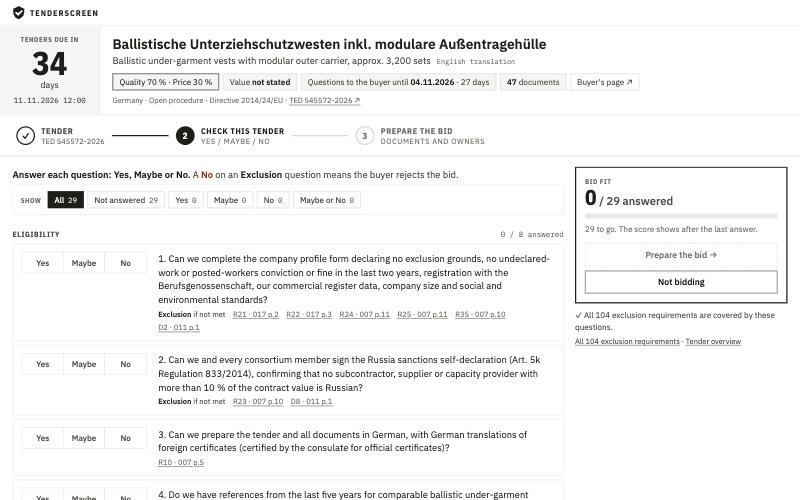
Check
Yes / Maybe / No questions that decide go or no-go. Each one shows the sentence in the buyer's document it comes from.
Requirements
Every rule we found, in plain English, exclusion rules first, each with the page it is on.
Prepare the bid
Every document to hand in, with an owner, a status and your own target date.
Who does what
One table of who answers which questions and prepares which documents.
Contradictions
Places where the documents disagree, both sides shown, with a question you can send to the buyer.
Deadlines
Submission, questions and other dates from TED and the documents, with a warning when they disagree.
Source documents
Every buyer document, with each finding marked on its page.
What changed
We check TED every day. When the buyer publishes something new, you update the analysis and see what changed; your answers stay.
Explore a real analysed tender
No account needed. Click through the same pages your team would use.
- 30Yes / Maybe / No questions that decide go or no-go
- 37documents to hand in, ready to assign
- 47buyer documents, with every finding marked on its page
In a blind test on a real police vest tender, TenderScreen found all 58 exclusion rules of an independent answer key.
One tender, October 2026, judged by a reviewer against a key written by two annotators; 2 of the 58 were graded less severe than the key. Results on other tenders will differ. How to read the resultsBuilt with people who bid for defence tenders
TenderScreen was built together with people who prepare bids for defence and security tenders as their daily work. They tested it on real tenders and told us what a head of sales needs to see before a go/no-go. We changed the analysis until it found the requirements they would have looked for.
Try it on your tender
Paste a TED number and see its deadline and whether we can collect its documents, before you pay anything.
Check a tender